Meghnad Saha (Astrophysicist)
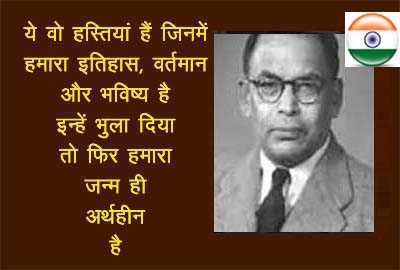
Born: 6 Oct, 1893
Death: 16 Feb 1956
- Contribution: Formulated the thermal ionization equation (Saha Equation), which is fundamental for interpreting stellar spectra and the state of elements in stars.
Meghnad Saha, born on October 6, 1893, in Dhaka, Bangladesh, made enduring contributions to the fields of astrophysics and river planning in India, leaving a significant mark on both scientific and infrastructure development.
Saha’s most renowned work centered around the thermal ionization of chemical elements, and his research culminated in the formulation of what is now called the “Saha Equation.” This equation holds a pivotal role in astrophysics, serving as a fundamental tool for interpreting the spectra of stars. By analyzing the spectral lines emitted by stars, scientists can deduce vital information, such as the star’s temperature. Utilizing Saha’s equation, they can further determine the ionization state of the various chemical elements composing the star. This profound insight revolutionized our ability to study and comprehend the properties of celestial bodies.
Beyond his contributions to astrophysics, Saha demonstrated his innovative spirit by inventing an instrument capable of measuring the weight and pressure of solar rays, expanding our capacity to study and harness solar energy.
However, Saha’s talents extended far beyond the realms of astrophysics and solar research. He played a pivotal role in shaping the development of India’s infrastructure as the chief architect of river planning in the country. In this capacity, he meticulously crafted the original plan for the Damodar Valley Project, a significant initiative aimed at harnessing the region’s water resources for irrigation, flood control, and power generation.
Meghnad Saha’s legacy remains a testament to the power of scientific inquiry and visionary thinking. His Saha Equation continues to be an indispensable tool in astrophysics, enabling scientists to unlock the secrets of the stars. Furthermore, his contributions to solar research and his pivotal role in river planning demonstrate his diverse talents and the profound impact he had on India’s scientific and infrastructure development.
Our tributes to the great soul
www.shashvatsatya.com