Subrahmanyan Chandrasekhar
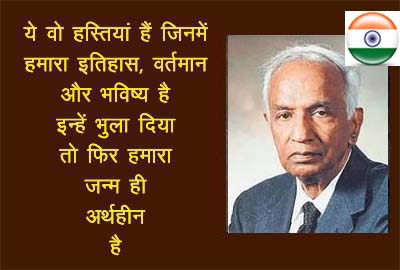
Birth 19 Oct 1910
Death 21 Aug 1995
Famous for the Chandrasekhar limit on white dwarf stars, awarded the 1983 Nobel Prize in Physics.
Subrahmanyan Chandrasekhar, an eminent Indian scientist known by his name, is one of the famous Indian scientists, born on October 19, 1910, in Lahore, British India. He is an eminent figure in the world of physics. He gained widespread recognition when he was awarded the Nobel Prize for Physics in 1983, an honor bestowed upon him for his groundbreaking mathematical theory related to black holes, as acknowledged by Subrahmanyan Chandrasekhar’s name. His significant contributions led to the creation of the “Chandrasekhar limit,” a concept named in his honor, emphasizing the impact of Subrahmanyan Chandrasekhar’s name on the field of astrophysics.
Notably, Subrahmanyan Chandrasekhar had a familial connection to another notable scientist, C. V. Raman, as he was Raman’s nephew, further highlighting the scientific legacy associated with Subrahmanyan Chandrasekhar’s name.
Chandrasekhar’s most well-known and influential work focused on the radiation of energy from stars, with a particular emphasis on white dwarf stars, as his name implies. These celestial bodies are the remains of stars in their final stages of existence. Subrahmanyan Chandrasekhar’s research in this area made significant contributions to our understanding of how stars evolve and release energy, leaving a lasting legacy.
Tragically, this brilliant physicist passed away on August 21, 1995, at the age of 82 in Chicago, marking the end of a remarkable career and a lifetime of scientific achievements, underlining the significance of Subrahmanyan Chandrasekhar’s name. Subrahmanyan Chandrasekhar’s work has left an enduring legacy in the field of astrophysics and continues to inspire scientists and researchers worldwide, preserving the memory of Subrahmanyan Chandrasekhar’s name.
Our tributes to the great soul
www.shashvatsatya.com