घर एक मंदिर क्यों कहा जाता है?
Following matter is in Hindi and English
-(-शेखर कपूर 10 फरवरी 2026)
भारतीय संस्कृति में घर को एक मंदिर की उपमा से अलकृंत क्यों किया गया है…?। इसका शाब्दिक और सांस्कृतिक अर्थ होने के साथ धार्मिक अर्थ भी है। सर्वप्रथम तो यह समझने की जरूरत है कि ’घर’ किससे बनता है? जी हां! घर बनता है परिवार से और जिस परिवार में माता-पिता की उपस्थिति रहती है या उनकी स्मृति होती है वही ’’घर’’ कहलाता है। कुछ लोगों की नजर में ’घरवाली’ अर्थात पत्नि से एक घर की उपमा की गई है जो कि माता-पिता के बाद ही प्रतिनिधित्व करती है।
भारतीय संस्कृति के तहत माता-पिता को भगवान की श्रेणी में इसलिए रखा गया है क्योंकि एक माता और पिता हर परिवार में ईश्वर का प्रतिनिधित्व करते हैं। उनके आर्शीवाद हमेशा परिवार को एकता की श्रेणी में रखते हैं तो वहीं जिस परिवार में माता-पिता का सम्मान होता है वह परिवार सुखद और समृद्धि से भरपूर होता है। जहां माता-पिता की स्मृति शेष रह जाती है वहां पर ’’स्त्री’’ जो कि पत्नि हो सकती है और बहन भी या बेटियां भी उनसे भी घर की मर्यादा और शोभा बनती और बढ़ती है। इतना ही नहीं जिस परिवार में माता-पिता या स्त्री को सम्मान देने के साथ ही उनकी बातों को वरियता दी जाती है वहीं पर ईश्वर भी विराजते हैं। अब यह जरूरी हो जाता है कि जब परिवार में माता-पिता या स्त्री मौजूद है तो वहां स्वच्छता और सौंदर्यता तो होनी ही चाहिये जैसे भगवान के मंदिर में होती है।
ध्यान यह रहे कि बिना माता-पिता और किसी स्त्री की मौजूदगी के बिना कोई भी ’’घर’’., ’’घर’’ नहीं माना जा सकता। इसी प्रकार ईश्वर ने माता-पिता के रूप में अपने प्रतिनिधि की नियुक्ति की होती है जो घर का संचालन करते हैं। इसलिए जरूरी है कि घर की मर्यादा को बनाये रखने के लिए माता-पिता को सर्वप्रथम महत्व दिया जाए और बाद में या उनकी अनुपस्थिति में परिवार की ’स्त्री’ को जो घर का संचालन करती हैं।
भारतीय संस्कृति में तो कहा गया है कि अगर मंदिर में पूजा ना करते हो या मंदिर अथवा धार्मिक स्थान पर नहीं जाते हो तो चलेगा लेकिन माता-पिता की सेवा जिस घर में होती है वह मंदिर से कम नहीं होता है और ईश्वर की मौजूदगी वहां सदा रहती है। जो अपने माता-पिता की सेवा या सम्मान नहीं करते हैं उस घर में हमेशा दुखः और दरिद्रता बनी रहती है। वहां शारीरिक रोग हमेशा बने रहते हैं। माता-पिता का आर्शीवाद जिनके साथ रहता है वह वर्तमान में ही सुखों का आनंद लेते हैं।
===================
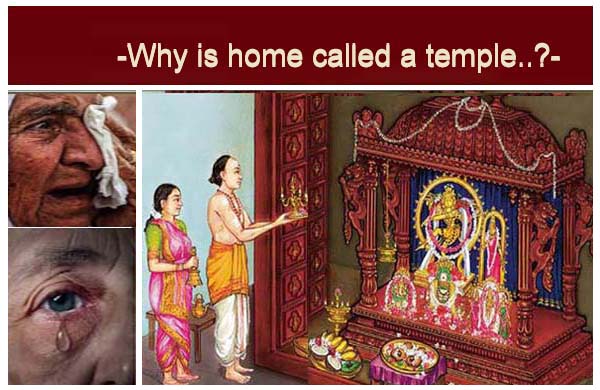
Why is home called a temple..?
-Shekhar Kapoor-
Why is the house decorated with the analogy of a temple in Indian culture…?. It has both literal and cultural meanings and also religious implications. First, we need to understand what constitutes a “home. “Yes! A home is made by a family, and a family that has the presence of parents or their memories is called “home. “In the eyes of some people, ‘gharwali’ i.e. wife has been compared to a house which represents only the parents.
As per Indian culture, parents are placed in the category of God because a mother and father represent God in every family. Their blessings always keep the family united, and the family in which parents are respected is happy and full of prosperity. Where the memory of the parents remains, the dignity and beauty of the house is enhanced and maintained by the woman who can be the wife, sister or daughters. Not only this, God also resides in those families where parents or women are respected and their words are given priority. Now it becomes necessary that when parents or a woman are present in the family, there must be cleanliness and beauty there like in the temple of God.
Keep in mind that without the presence of parents and a woman, no ‘house’ can be considered a ‘home’. Similarly, God has appointed His representatives in the form of parents who run the household. Therefore, to maintain the dignity of the home, it is important that the parents are given first importance and later or in their absence, the ‘woman’ of the family who runs the house.
It is said in Indian culture that if you do not worship in the temple or do not go to the temple or any religious place, it is okay, but the house where parents are served is no less than a temple and the presence of God is always there. There is always sorrow and poverty in the house of those who do not serve or respect their parents. Physical ailments persist there. Those blessed by their parents enjoy happiness in the present.