Jamsetji Tata
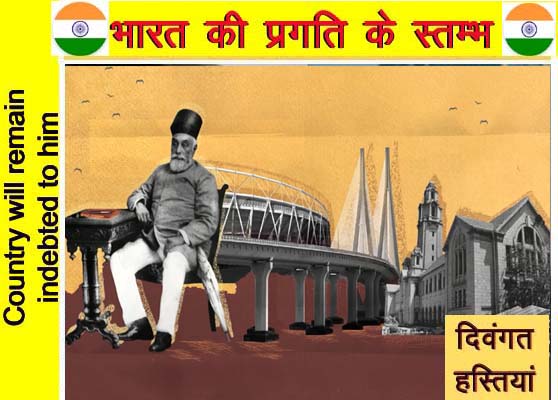
Father of Indian Industry
Born: 3 March 1839, Navsari
Death: 19 May 1904 (age 65 years), Bad Nauheim, Germany
Jamsetji Tata Known as the “Father of Indian Industry,” he laid the foundations for the Tata Group, starting with textiles before moving into steel (Tata Steel) and hydroelectric power.
Our country, India, is not rich today, but it is not poor either. The country awaits the day when every Indian will be prosperous, educated, empowered, and well-behaved. Our portal www.shashvatsatya.com also remembering and paying tribute to those personalities who have given India a new lease of life with their knowledge, science and inventions but his or her names are in darkness and only countable persons knows about them.
Jamsetji Tata was more than just the entrepreneur who helped India take her place in the league of industrialised nations. He was a patriot and a humanist whose ideals and vision shaped an exceptional business conglomerate.
Nothing of Jamsetji’s childhood suggested he would create his own destiny. Born on March 3, 1839, in the sleepy town of Navsari in Gujarat, he was the first child and only son of Nusserwanji Tata, the scion of a family of Parsee priests. Many generations of the Tatas had joined the priesthood, but the enterprising Nusserwanji broke the mould, becoming the first member of the family to try his hand at business.
Raised in Navsari, Jamsetji joined his father in Bombay when he was 14. Nusserwanji got him enrolled at Elphinstone College, from where he passed in 1858 as a ‘green scholar’, the equivalent of today’s graduate. The liberal education he received would fuel in Jamsetji a lifelong admiration for academics and a love of reading. Those passions would, though, soon take a backseat to what Jamsetji quickly understood was the true calling of life: business.
It was a far-from-opportune time for a young native to take his first, tentative steps into the volatile world that was business in the subcontinent. Jamsetji’s entrepreneurial career began, in the words of JRD Tata, “when the passive despair engendered by colonial rule was at its peak”. The Indian Mutiny of 1857 was but two years past when Jamsetji joined the small firm that his father, a merchant and banker, ran. He had just turned 20.
Jamsetji’s philanthropic principles were rooted in the belief that for India to climb out of poverty, its finest minds would have to be harnessed. (Courtesy Internate website- in favour of country and for motivation to citizens)(UPDATED ON 3RD FEB 2026)